Small daily duas for kids are one of the easiest and most beautiful ways to connect a child with Allah. When a child says “Bismillah” before eating or a short dua before sleeping, they learn that Allah is part of every moment of the day, not only prayer time.
Here are 10 easy daily duas for kids, with Arabic, simple pronunciation and meaning, plus tips to help your child remember them.
Why Teach Daily Duas for Kids Early?

- Daily duas for kids are short, so children can learn them quickly.
- They connect daily routines (eating, sleeping, going out) with remembering Allah.
- They build good manners and gratitude.
- Children feel proud and confident when they know them by heart.
10 Easy Daily Duas for Kids

1. Before eating
بِسْمِ اللَّهِ
Pronunciation: Bismillah
Meaning: In the name of Allah. (If your child forgets at the start, they can say: Bismillahi awwalahu wa akhirahu — In the name of Allah, at its beginning and its end.)
Source: Sunan Abu Dawud, Jami at-Tirmidhi
2. After eating
الْحَمْدُ لِلَّهِ الَّذِي أَطْعَمَنِي هَذَا وَرَزَقَنِيهِ مِنْ غَيْرِ حَوْلٍ مِنِّي وَلَا قُوَّةٍ
Pronunciation: Alhamdu lillahil-ladhi at’amani hadha wa razaqanihi min ghayri hawlin minni wa la quwwah
Meaning: All praise is for Allah who fed me this and provided it for me without any power or strength from me. (For very young children, simply saying Alhamdulillah is a great start.)
Source: Jami at-Tirmidhi, Sunan Abu Dawud
3. Before sleeping
بِاسْمِكَ اللَّهُمَّ أَمُوتُ وَأَحْيَا
Pronunciation: Bismika Allahumma amutu wa ahya
Meaning: In Your name, O Allah, I die and I live.
Source: Sahih al-Bukhari
4. After waking up
الْحَمْدُ لِلَّهِ الَّذِي أَحْيَانَا بَعْدَ مَا أَمَاتَنَا وَإِلَيْهِ النُّشُورُ
Pronunciation: Alhamdu lillahil-ladhi ahyana ba’da ma amatana wa ilayhin-nushur
Meaning: All praise is for Allah who gave us life after He caused us to die (sleep), and to Him is the return.
Source: Sahih al-Bukhari
5. Before entering the toilet
اللَّهُمَّ إِنِّي أَعُوذُ بِكَ مِنَ الْخُبُثِ وَالْخَبَائِثِ
Pronunciation: Allahumma inni a’udhu bika minal-khubuthi wal-khaba’ith
Meaning: O Allah, I seek Your protection from evil and evil beings. (Say it before going in, not inside.)
Source: Sahih al-Bukhari, Sahih Muslim
6. After leaving the toilet
غُفْرَانَكَ
Pronunciation: Ghufranaka
Meaning: I ask for Your forgiveness.
Source: Sunan Abu Dawud, Jami at-Tirmidhi
7. When leaving the house
بِسْمِ اللَّهِ تَوَكَّلْتُ عَلَى اللَّهِ وَلَا حَوْلَ وَلَا قُوَّةَ إِلَّا بِاللَّهِ
Pronunciation: Bismillahi tawakkaltu ‘alallah, wa la hawla wa la quwwata illa billah
Meaning: In the name of Allah, I put my trust in Allah, and there is no power and no strength except with Allah.
Source: Sunan Abu Dawud, Jami at-Tirmidhi
8. For more knowledge (great before class or study)
رَّبِّ زِدْنِي عِلْمًا
Pronunciation: Rabbi zidni ‘ilma
Meaning: My Lord, increase me in knowledge.
Source: Quran, Surah Ta-Ha 20:114
9. For parents
رَّبِّ ارْحَمْهُمَا كَمَا رَبَّيَانِي صَغِيرًا
Pronunciation: Rabbir-hamhuma kama rabbayani saghira
Meaning: My Lord, have mercy on them (my parents) as they raised me when I was small.
Source: Quran, Surah Al-Isra 17:24
10. When sneezing
الْحَمْدُ لِلَّهِ
Pronunciation: Alhamdulillah
Meaning: All praise is for Allah. The person who hears it replies: Yarhamukallah (May Allah have mercy on you). And the one who sneezed answers: Yahdikumullahu wa yuslihu balakum (May Allah guide you and set your affairs right).
Source: Sahih al-Bukhari
How to Help Your Child Remember Duas
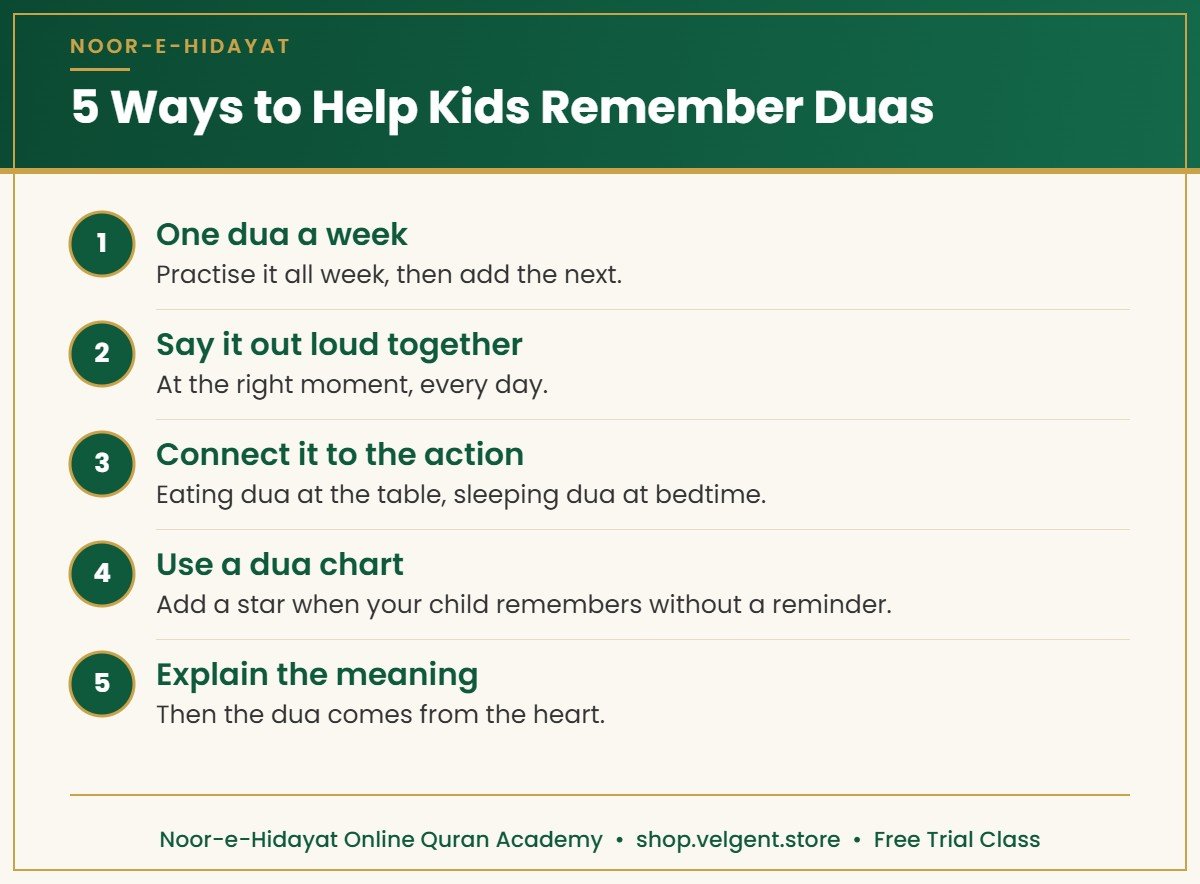
- One dua a week. Pick one of these daily duas for kids, practise it all week, then add the next.
- Say it out loud together. Children learn by hearing you say it at the right moment, every day.
- Connect it to the action. Practise the eating dua at the dinner table, and the sleeping dua at bedtime.
- Use a dua chart. Stick a chart of daily duas for kids on the fridge or bedroom wall and add a star when your child says a dua without a reminder.
- Explain the meaning. When a child knows what they are saying, the dua comes from the heart.
Get the Arabic Right
Daily duas for kids are in Arabic, so pronunciation matters. A child who has learned the letters properly through Noorani Qaida will find it much easier to read and say duas correctly. If you are teaching Namaz too, our guide on how to teach Namaz to kids and our list of short surahs for kids fit perfectly alongside these daily duas for kids.
Frequently Asked Questions
Which dua should I teach my child first?
“Bismillah” before eating is the easiest place to start, because children eat several times a day and get lots of practice.
At what age can children start learning duas?
Children as young as two or three can start with “Bismillah” and “Alhamdulillah”. Longer daily duas for kids can be added from around four or five.
Is it okay if my child says a dua in their own language?
Yes, a child can always talk to Allah in their own words. Learning the Sunnah duas in Arabic as well is a beautiful habit to build alongside that.
Learn With a Teacher
At Noor-e-Hidayat, our teachers help children read Arabic correctly, memorise surahs and learn daily duas in live one-to-one online classes. Book a free trial class to get started.
Pingback: Online Quran Classes for Kids: How to Start Without the Stress - Noor-e-Hidayat
Pingback: Daily Hifz Routine for Kids: A Realistic Plan for Home - Noor-e-Hidayat
Pingback: How to Teach Namaz to Kids: 5 Easy Steps for Parents - Noor-e-Hidayat