Every Muslim parent wants their child to love Namaz, not just “do” it. But when you try to teach Namaz to kids, it can feel confusing. Where do you start? How much is too much? What if they lose interest?
The good news: children learn Namaz best the same way they learn everything else, by watching you, copying you and practising little by little. Here is a simple, step-by-step guide to teach Namaz to kids that real families can follow.
When Should You Start to Teach Namaz to Kids?
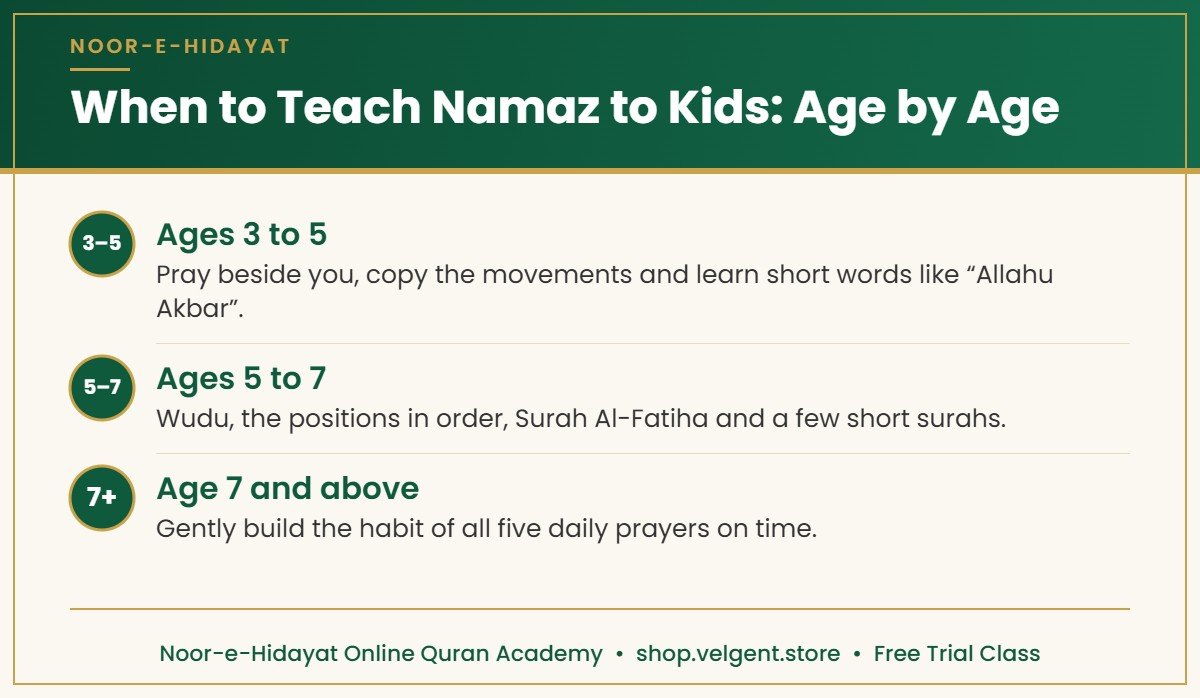
The Prophet ﷺ taught that children should be told to pray when they reach the age of seven (Sunan Abu Dawud 495). That does not mean you wait until their seventh birthday to start. Most children begin copying their parents on the prayer mat at three or four years old. That early copying is the perfect, pressure-free start.
- Ages 3 to 5: let them pray beside you, copy the movements and learn short words like “Allahu Akbar”.
- Ages 5 to 7: teach Wudu, the positions in order, Surah Al-Fatiha and a few short surahs.
- Age 7 and above: gently build the habit of praying all five daily prayers on time.
Step 1: Be the Example
The easiest way to teach Namaz to kids is to pray in front of them. Children copy what they see far more than what they hear. When your child sees you stop what you are doing to pray, they learn that Namaz matters. Pray at home where they can see you, and invite them to stand next to you. Do not worry if they wander off halfway. That is normal at a young age.
Step 2: Teach Wudu First
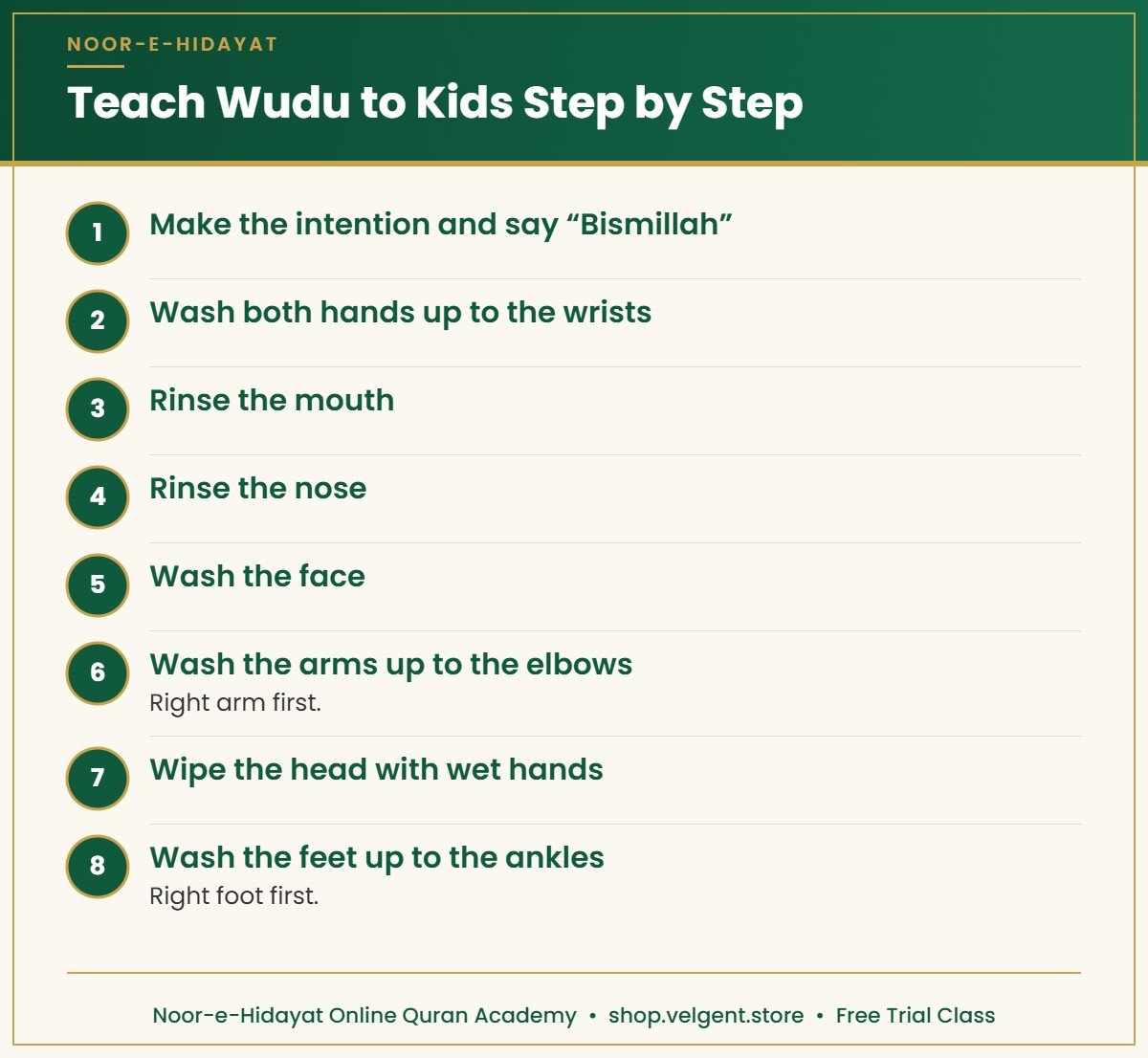
Before you teach Namaz to kids, make Wudu a fun, hands-on routine. Show them each step slowly at the sink and let them do it with you:
- Make the intention and say “Bismillah”.
- Wash both hands up to the wrists.
- Rinse the mouth.
- Rinse the nose.
- Wash the face.
- Wash the arms up to the elbows, right arm first.
- Wipe the head with wet hands.
- Wash the feet up to the ankles, right foot first.
Turn it into a little game: “What comes after the face?” Within a few weeks, most children can do it on their own.
Step 3: Teach the Positions One at a Time
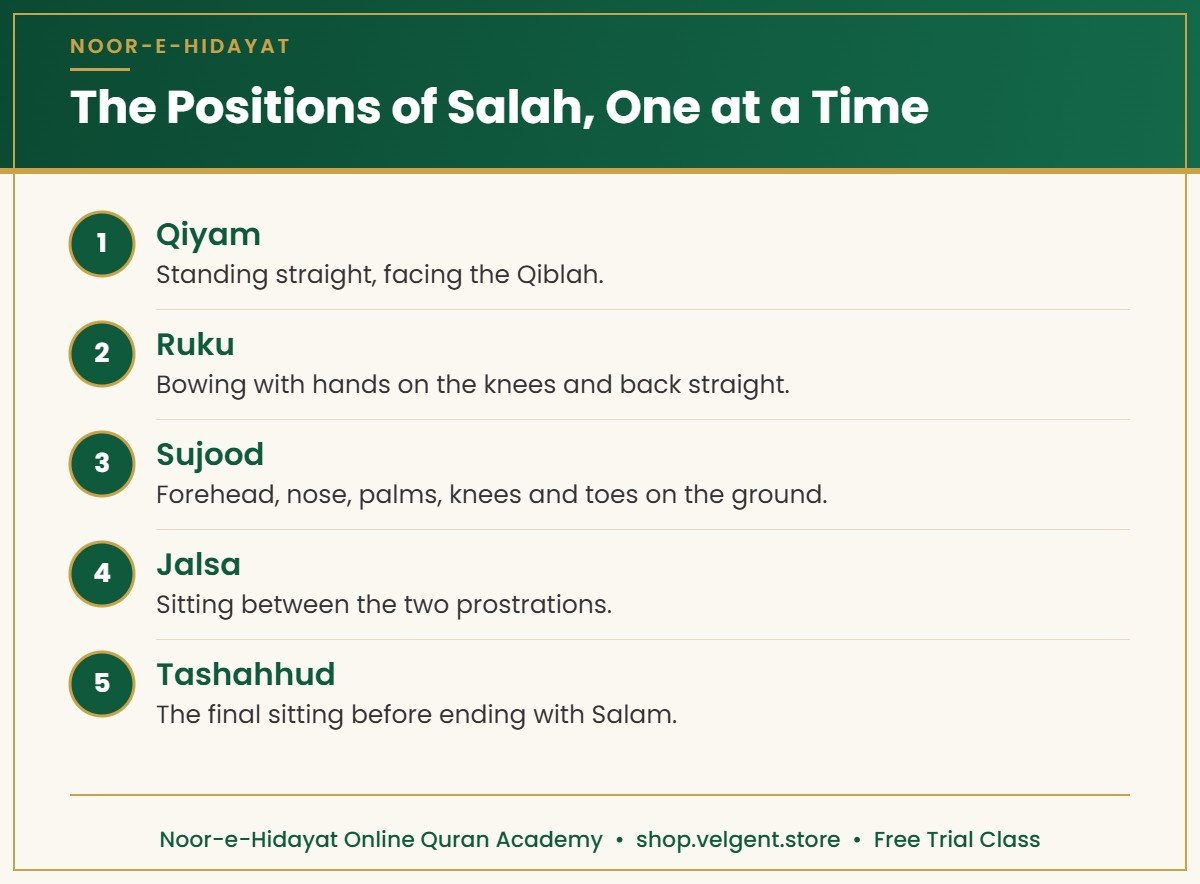
Do not try to teach the whole prayer in one day. The best way to teach Namaz to kids is to break it down. Teach one position, practise it for a few days, then add the next:
- Qiyam: standing straight, facing the Qiblah.
- Ruku: bowing with hands on the knees and back straight.
- Sujood: prostration with the forehead, nose, palms, knees and toes on the ground.
- Jalsa: sitting between the two prostrations.
- Tashahhud: the final sitting before ending the prayer with Salam.
Step 4: Teach the Words Slowly
Start with the shortest and most repeated words. “Allahu Akbar” comes first. Then Surah Al-Fatiha, which is read in every rak’ah. After that, add short surahs like Al-Ikhlas and Al-Kawthar. Our list of 10 short surahs every child should memorize first gives you a simple order to follow.
Next, teach the short phrases said in Ruku and Sujood, then the Tashahhud and Durood. Ask your child’s Quran teacher or a local scholar if you are unsure about the exact words your family follows.
Step 5: Build a Daily Habit
- Use a prayer chart. Let your child tick each prayer they pray. Children love seeing their progress.
- Give them their own prayer mat. A small mat of their own makes Namaz feel special.
- Pray together. Even one family prayer a day, like Maghrib, makes a big difference.
- Link prayers to daily life. “We eat after Zuhr” or “We read a story after Isha” helps children remember.
- Praise effort. Notice when they pray without being reminded, and tell them you are proud.
Common Mistakes When You Teach Namaz to Kids
- Being too harsh. Shouting or scaring a child about Namaz can make them dislike it. Gentle, steady reminders are a better way to teach Namaz to kids.
- Expecting perfection early. Young children will fidget, forget words and look around. That is okay. Focus on the habit first.
- Only correcting, never explaining. Tell your child why we pray: to thank Allah and talk to Him. Children connect more when they understand.
How Quran Classes Help With Namaz
Namaz and Quran go hand in hand, so Quran classes make it easier to teach Namaz to kids. When a child learns to read Arabic correctly through Noorani Qaida, their recitation in prayer improves too. A patient teacher can also help them memorise surahs and correct their pronunciation. You can also teach them small daily duas for kids alongside Namaz to build a strong daily connection with Allah.
Frequently Asked Questions
At what age is Namaz compulsory?
Namaz becomes obligatory when a child reaches puberty (baligh). Before that, parents teach and encourage it from around age seven so the habit is strong by then.
How do I teach Namaz to a child who gets bored?
Keep it short and positive. Pray together, use a prayer chart, and praise every small effort. Avoid long lectures.
Can my child learn Namaz and Quran online?
Yes. In live one-to-one online classes, a teacher can teach surahs, correct pronunciation and guide your child step by step.
Need Some Help?
At Noor-e-Hidayat, our qualified teachers help children learn to read the Quran correctly and memorise the surahs they need for Salah, which makes it much easier to teach Namaz to kids at home. Book a free trial class and see how your child enjoys it.
Pingback: Daily Duas for Kids: 10 Easy Duas With Meaning - Noor-e-Hidayat
Pingback: Online Quran Classes for Kids: How to Start Without the Stress - Noor-e-Hidayat
Pingback: 10 Easy Short Surahs for Kids to Memorize First (With Meanings) - Noor-e-Hidayat